Garden Habitat | September 13, 2026
If you want birds in your garden, the single most effective thing you can do is plant. Feeders help, and a bird bath is wonderful, but plants provide food, shelter, nesting sites, and insects in a way that no plastic feeder ever can. The good news is that you do not need a large garden or a huge budget. A few well-chosen native plants, even in pots or a small border, can make a real difference.
The key word here is native. Plants that evolved alongside your local birds tend to support far more insect life, and insects are the engine of a bird-friendly garden. Even seed-eating birds rely on insects during the breeding season to feed their chicks. By choosing native species, you are building a food web rather than just a feeding station.
Best Plants for Food and Shelter
One of the most versatile native shrubs is hawthorn. It offers dense, thorny growth that birds love for nesting, spring blossoms that attract insects, and autumn berries that provide a vital food source as the weather turns cold. It can be grown as a hedge, which is ideal for small gardens because it creates a living boundary that birds can move along safely.
Another excellent choice is elder. It grows quickly, produces clusters of tiny flowers that pollinators adore, and then heavy crops of berries that are a magnet for blackbirds, thrushes, and warblers. Elder can be kept compact with regular pruning, so it works even in a modest space.
For something a little more ornamental, consider rowan. Its delicate leaves cast light shade, its spring flowers are subtle but useful, and its bright red berries in autumn are a favorite of thrushes and waxwings. Rowan is well-suited to smaller gardens because it does not grow enormous and its roots are not overly invasive.
Do not overlook ivy. Often dismissed as a nuisance, mature ivy is one of the best wildlife plants you can have. It provides dense evergreen cover for roosting and nesting, its late flowers are a lifeline for insects when little else is in bloom, and its black berries feed birds through the winter. If you can let a patch of ivy climb a wall or fence, you will be rewarded.
For ground cover and seed heads, think about teasel and sunflower. Teasel's spiky heads hold seeds that goldfinches love, and its structure adds winter interest. Sunflowers are easy to grow from seed, even with children, and the seed heads can be left standing for birds to pick over naturally.
Designing a Small Space That Works
In a small garden, layering is your best friend. Aim for a canopy, a mid-layer, and ground cover. A small tree such as rowan or a native cherry can form the canopy. Shrubs like hawthorn and elder fill the middle. Ground-level plants such as ivy, native geraniums, and seed-bearing perennials complete the structure. This layered approach mimics natural woodland edges, which are some of the richest habitats for birds.
Water is the other essential element. A shallow dish, a small pond, or even a regularly refilled bird bath will draw birds in, especially during dry spells and freezing weather. Keep it clean and place it near cover so birds feel safe while drinking and bathing.
Try to avoid being too tidy. Leave some seed heads standing through winter, allow a few fallen leaves to remain under shrubs, and resist the urge to cut everything back in autumn. These small decisions create overwintering sites for insects and foraging opportunities for birds.
Finally, be patient. A new plant may take a season or two to establish, and birds may take a while to discover it. But once your garden becomes part of the local green network, you will notice more activity, more species, and more of those quiet moments that make backyard birdwatching such a pleasure. Start with two or three native plants this year, and let the garden grow into a habitat.


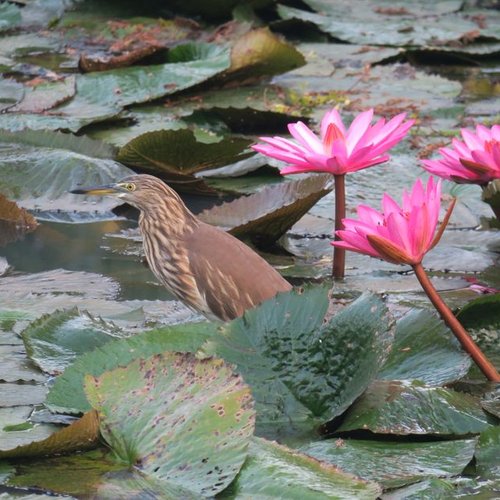




















A modest pond is one of the most powerful things you can add to a wildlife-friendly garden.
Alice Rose
Sep 13, 2026 at 3:12 pm